Belly Tank Car

Brengun, 1/32 scale
S
u m m a r y : |
Description and Item No.: |
Brengun Kit No. BRL32056 - Belly Tank Car |
Contents and Media: |
13 parts in grey resin; 17 brass photo-etched parts; decal sheet; one photo-etched fret; printed clear acetate; instructions. |
Price: |
€22.34 plus shipping available online at Brengun
£27.40 EU Price (£22.83 Export Price) Plus Shipping at Hannants
and hobby retailers worldwide |
Scale: |
1/72 |
Review Type: |
First Look |
Advantages: |
Cleanly cast parts; high level of detail; unique subject choice. |
Disadvantages: |
None noted. |
Recommendation: |
This is a straightforward kit of a very interesting subject. Highly Recommended. |
Reviewed by Brett Green

The story of the WWII belly tank racers is one of ingenuity born from surplus—a uniquely American fusion of wartime technology and post-war hot-rodding spirit that transformed discarded aviation hardware into some of the most distinctive racing machines ever seen.
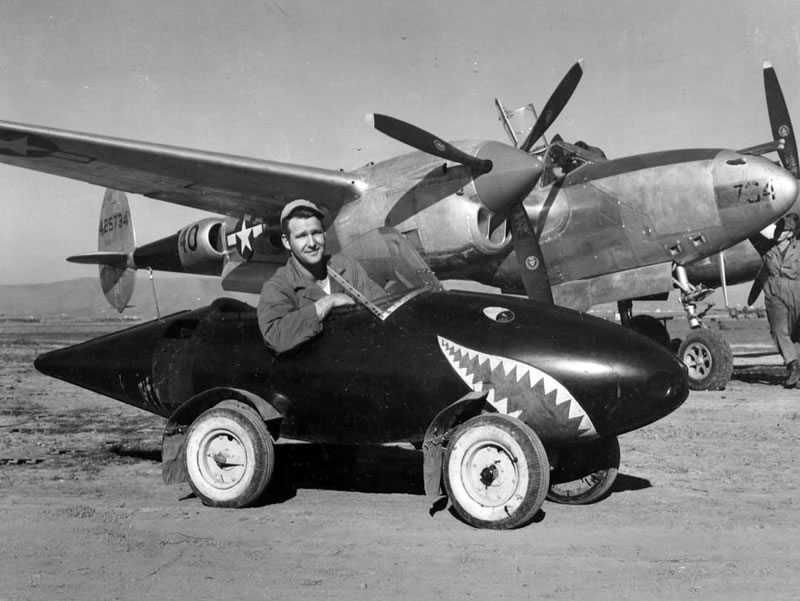
Origins – From War to Speed
At the end of the Second World War, vast quantities of surplus equipment flooded the civilian market. Among these were streamlined external fuel tanks—commonly known as drop tanks—used by long-range fighters such as the North American P-51 Mustang and the Lockheed P-38 Lightning. These tanks, typically constructed from lightweight aluminium and designed for minimal aerodynamic drag, were sold off cheaply, often for just a few dollars each.
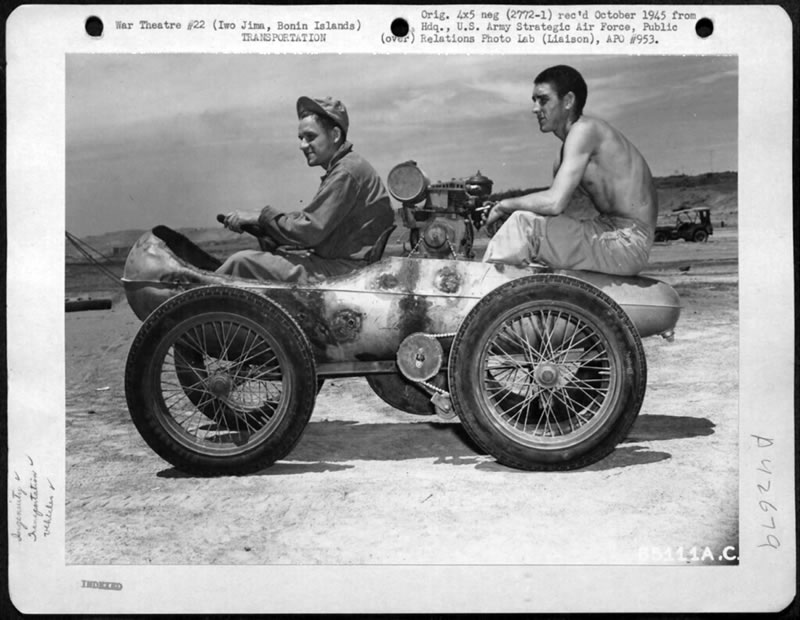
Hot rodders, particularly in Southern California, quickly recognised the potential of these sleek, teardrop-shaped forms. Lightweight, strong, and inherently aerodynamic, they offered an ideal starting point for land speed racing machines.
The Birth of the Belly Tank Racer
The dry lakes of California—most notably Muroc Dry Lake—became the proving grounds for these improvised racers. Builders would split the drop tanks longitudinally, insert a simple chassis, and mount a compact engine—often a Ford flathead V8—either ahead of or behind the driver.
The resulting vehicles were extraordinarily low and narrow, with the driver seated in a reclined or even prone position to minimise frontal area. These machines became known as “belly tankers” or simply “lakesters,” reflecting both their origins and their environment.
Design and Engineering
Despite their humble beginnings, belly tank racers were far from crude. Builders demonstrated remarkable engineering creativity in adapting aircraft components to automotive use.
The fuselage-like tank provided a ready-made aerodynamic shell. Suspension systems were typically minimal, as the dry lake surfaces were relatively smooth, while narrow tyres reduced rolling resistance. Steering was often basic, and cockpit space was extremely confined—comfort was sacrificed entirely in pursuit of speed.
Cooling and airflow presented challenges. With engines enclosed within the streamlined body, innovative ducting and venting solutions were required to prevent overheating. Access for maintenance was also limited, demanding careful planning during construction.
The Golden Age – Bonneville and Beyond
As the sport evolved, racers moved from the dry lakes to the vast salt flats of Bonneville Salt Flats. Here, the belly tankers truly came into their own.
During the late 1940s and 1950s, these machines set numerous class records, often outperforming more conventional hot rods thanks to their superior aerodynamics. Their streamlined shapes allowed relatively modest engines to achieve impressive speeds, sometimes exceeding 200 mph.
Clubs such as the Southern California Timing Association (SCTA) formalised competition rules, creating categories that encouraged innovation while maintaining safety standards.
Notable Examples and Builders
Among the most famous belly tank racers were those constructed from P-38 Lightning drop tanks, which were particularly well-suited due to their size and shape. Builders such as Bill Burke—often credited with pioneering the concept—played a central role in popularising the format.
Burke’s early experiments demonstrated the potential of the drop tank as a racing body, inspiring countless others to follow suit. Each car was effectively a one-off, reflecting the personality and ingenuity of its builder.
Legacy and Influence
Although technology and materials have advanced dramatically since the post-war years, the influence of the belly tank racer endures. Modern land speed cars still prioritise aerodynamic efficiency above all else, a principle vividly demonstrated by those early lakesters.
Today, restored and newly built belly tank racers remain a popular feature at vintage racing events, celebrating a time when creativity and resourcefulness defined the cutting edge of speed.
Brengun is well known for offering unique and inspiring multi-media accessories and models.
This one certainly qualifies on both counts!
Brengun's new 1/32 scale Belly Tank Car comprises 13 parts in grey resin, 17 brass photo-etched parts, a small decal sheet, one photo-etched fret, printed clear acetate and instructions.

The grey resin parts appear to be conventionally cast. Quality is very good with no sink marks or other imperfections on my sample.
The belly tank car body is the jewell in the crown. This single resin part incorporates the tank itself and the interior.

The exterior includes two vehts at the the mid-rear plus a raised centreline seam and axles cast in place.
The basics inside the body are supplemented with a steering wheel, seat back and other details.

Additional parts are included on the supplied photo-etched fret.
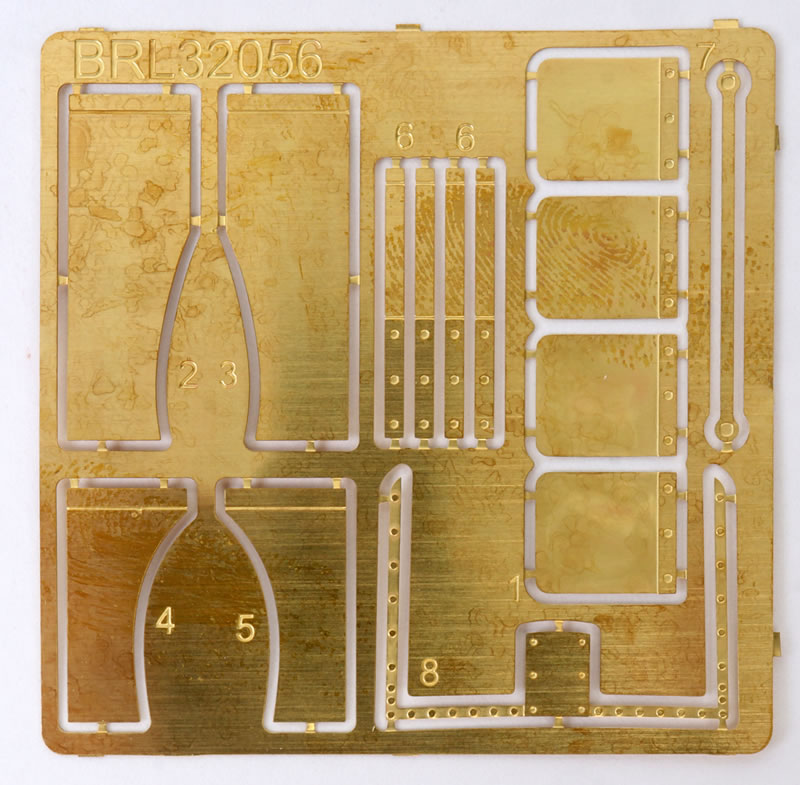
The windscreen is provided on a single clear acetate sheet with a black printed outline.

The package is rounded out by a modest sized decal sheet with shark's mouth and eyes.
The WWII belly tank racer is a perfect example of transformation—turning instruments of war into expressions of speed and individuality. From the skies over Europe and the Pacific to the shimmering expanses of Bonneville, these machines carried their aerodynamic heritage into a new arena, where ingenuity mattered more than budget and imagination was the ultimate fuel.
In the grand tapestry of automotive history, the belly tanker occupies a unique niche—sleek, purposeful, and undeniably evocative of a time when the boundaries of speed were limited only by courage and creativity.
Brengun's 1/32 scale WWII belly tank car is an interesting and inspiring model subect, very nicely executed.
Thanks to Brengun for the sample
Text and Images Copyright © 2026 by Brett Green
Page Created 10 April, 2026
Last updated
10 April, 2026
Back to HyperScale Main Page
Back to Reviews Page |
 Home
| What's New |
Features |
Gallery |
Reviews |
Reference |
Forum |
Search
Home
| What's New |
Features |
Gallery |
Reviews |
Reference |
Forum |
Search


