Messerschmitt
Me 262 A-1a / W.Gr.21
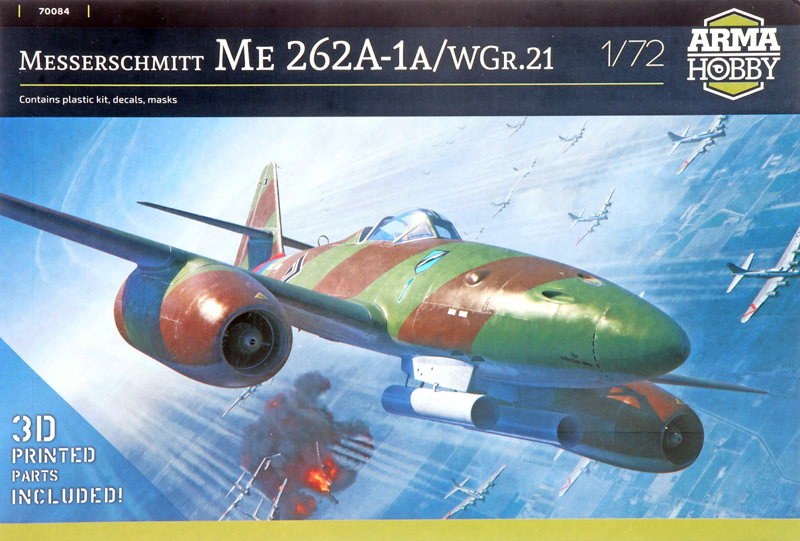
Arma Hobby, 1/72 scale
S
u m m a r y : |
Description and Item No.: |
Arma Hobby Kit No. 70084 - Messerschmitt Me 262 A-1a / W.Gr.21 |
Contents and Media: |
97 parts in grey plastic; two parts in 3d printed resin; six parts in clear plastic; self-adhesive die-cut canopy and wheel masks; three chrome ball bearings; markings for two options; undercarriage alignment jig included on the clear sprue. |
Price: |
€23.29 plus shipping available online at Arma Hobby
and hobby retailers worldwide |
Scale: |
1/72 |
Review Type: |
First Look |
Advantages: |
High quality moulding; excellent surface textures and detail; accurate; useful options; includes ordnance; high quality Cartograf decals. |
Disadvantages: |
End-opening box. |
Recommendation: |
Another release from Arma Hobby, another reminder of just how far 1/72 scale injection moulding has come in recent years.
Arma's Me 262 A-1a W.Gr.21 combines outstanding moulding quality, clever engineering and excellent detail with the added benefit of self-adhesive masks and first-rate Cartograf decals.
The distinctive rocket armament offers something a little different from the standard fighter version, while the thoughtful alignment jig promises straightforward assembly.
Highly Recommended.. |
Reviewed by Brett Green

W.Gr.21 Air-to-Air Rocket
The 21 cm Werfer-Granate 21 (W.Gr.21), also known in Luftwaffe service as the Bordrakete 21 (BR 21), was Germany's first operational air-to-air rocket. Introduced during the summer of 1943, it was developed in response to the growing threat posed by tightly packed USAAF bomber formations, whose concentrated defensive fire made conventional fighter attacks increasingly costly.
Rather than designing a new weapon, German engineers adapted the Army's proven 21 cm Nebelwerfer 42 artillery rocket for aerial use. Fired from simple tubular launchers, the spin-stabilised rocket carried a formidable 40.8 kg high-explosive warhead fitted with a time-delay fuse. Instead of relying on a direct hit, it was intended to detonate within or ahead of a bomber formation, disrupting the defensive "combat box" and creating opportunities for fighters armed with cannon to attack isolated aircraft.
The W.Gr.21 saw operational service on the Bf 109, Fw 190, Bf 110 and Me 410, but its large launch tubes imposed a significant aerodynamic penalty, reducing speed, climb rate and manoeuvrability. Accuracy was also limited by the rocket's relatively low velocity and pronounced ballistic trajectory. Even so, its psychological impact and ability to scatter bomber formations ensured it remained in service through 1944.
During the final months of the war, the Luftwaffe also experimented with the W.Gr.21 on the Messerschmitt Me 262A-1a jet fighter. Two launch tubes were mounted beneath the forward fuselage, one on either side of the nosewheel bay, allowing pilots to fire rockets into Allied bomber formations before closing to cannon range with the aircraft's four 30 mm MK 108 cannon. In theory, this increased the Me 262's stand-off capability during its brief, high-speed attack run.
In practice, however, the installation proved less successful than anticipated. The Me 262's exceptional speed made accurate rocket aiming difficult, while the bulky launch tubes partially negated the jet's aerodynamic advantages. Only a limited number of aircraft, primarily serving with Jagdgeschwader 7, flew operationally with the W.Gr.21 installation before it was superseded by the purpose-designed 55 mm R4M air-to-air rocket. Lighter, more accurate and capable of being carried in much greater numbers with minimal drag, the R4M was ideally suited to the Me 262 and represented the culmination of Germany's wartime development of air-to-air rocket armament.
Arma Hobby added to its lineup of classic 1/72 scale WWII fighters in March this year with a brand new Messerschmitt Me 262 A-1a.
After a short interval, Arma has now added an Me 262 A-1a W.Gr.21.
Arma Hobby's new 1/72 scale Messerschmitt Me 262 A-1a comprises 97 parts in grey plastic, two parts in 3d printed grey resin, six parts in clear plastic, three chrome ball bearings; self-adhesive die-cut canopy and wheel masks, markings for two options and an undercarriage alignment jig included on the clear sprue.
This model is in the standard series so we do not find photo-etched or 3d printed parts. Arma has, however, included self adhesive masks and you may download files for 3d printing your own detail parts. The die-cut masks are the paper "Kabuki" style.
The grey plastic parts are delivered on two sprues. Moulding quality is excellent with no flaws or visible moulding imperfections on my sample. Arma’s website advises that long-run metal moulds are used for their kit production, and it shows.
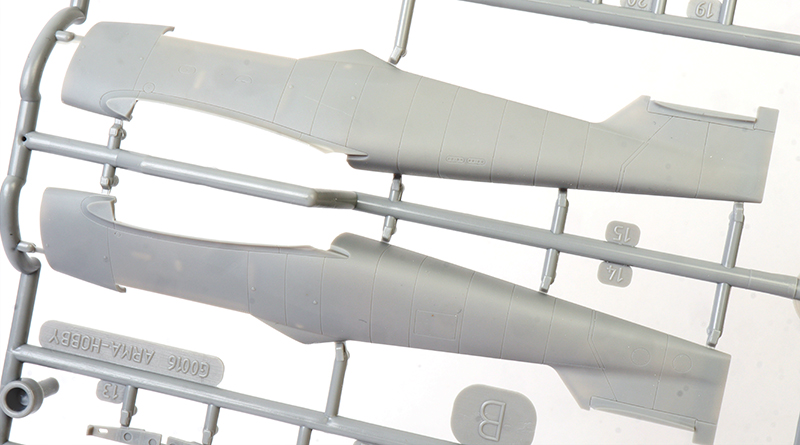
The main differences between March's original release and this Me 262 A-1a W.Gr.21 the nose-mounted air-to-air rockets and two different marking options.
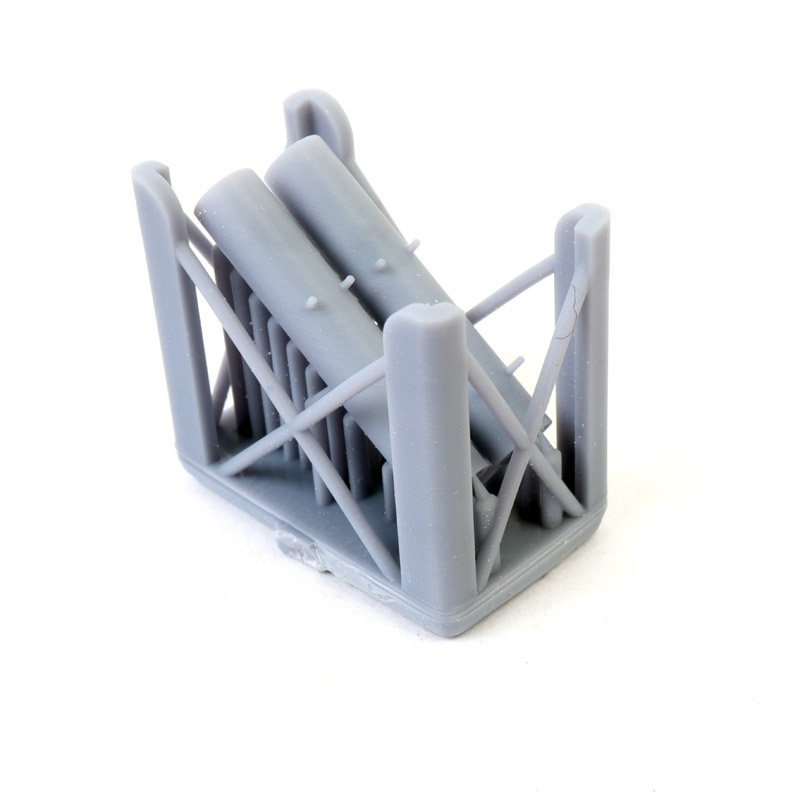
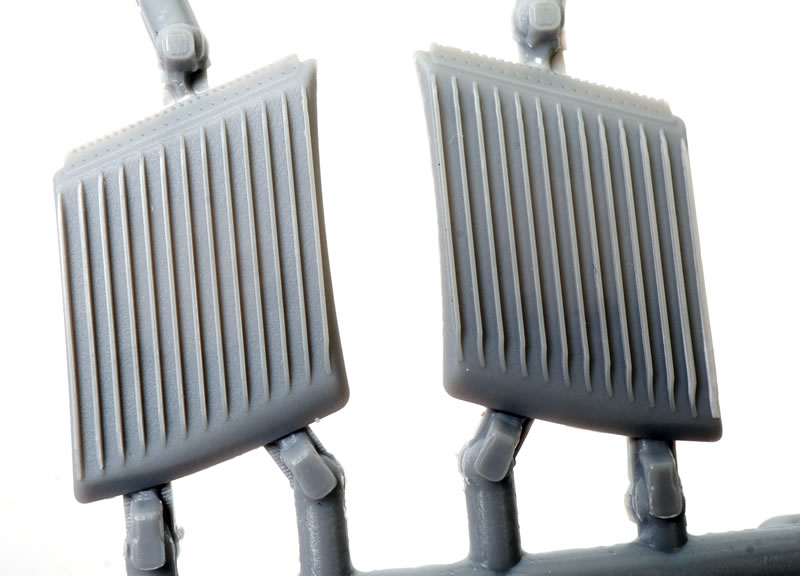
The W.Gr.21 rockets are beautifully presented as two 3d printed parts with interior details Four fine mounts are printed as part of each rocket tube and the streamlined fairings are found as plastic parts on the sprues.
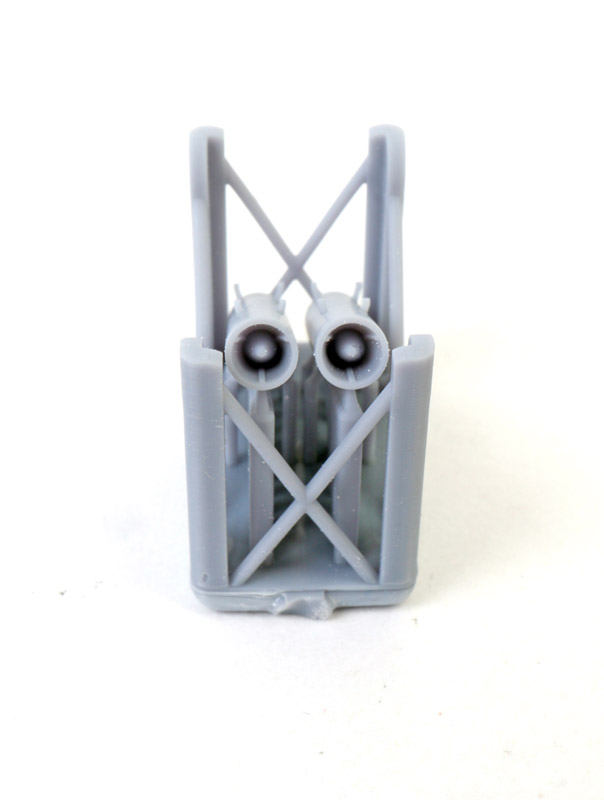
Being a long-run kit, the parts are moulded with all the alignment aids that you would expect including locating pins, holes and tabs.
The larger parts are moulded with a satin finish. Surface textures are just gorgeous. Recessed panel lines, circular fastener heads and other structural details are very fine.
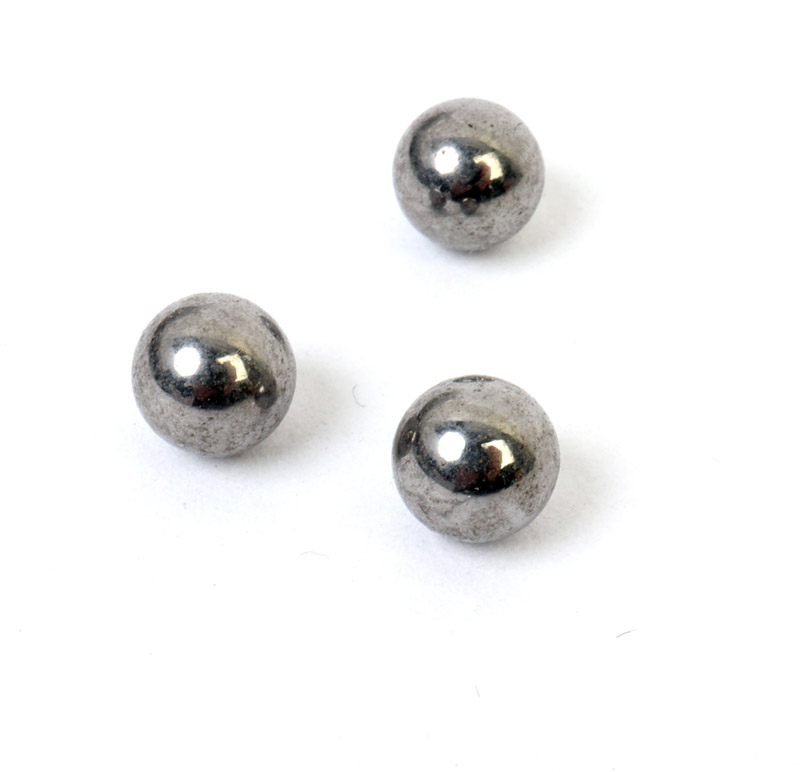
The fuselage is supplied as left and right halves and a separate nose sub-assembly. Three small chrome ball bearings are thoughtfully supplied as nose weight. There are appropriate recesses to ensure positive fit for the weights.
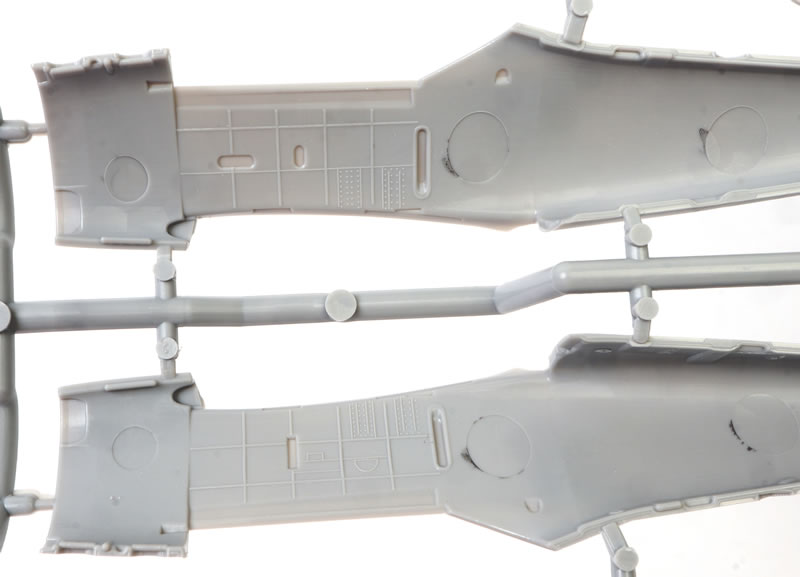
Some structural cockpit sidewall detail is moulded directly to the inside of the fuselage.
Additional separate cockpit parts include a plastic tub, separate seat back with cushion, side consoles, throttle quadrant; instrument panel, switch panel, control column and more.
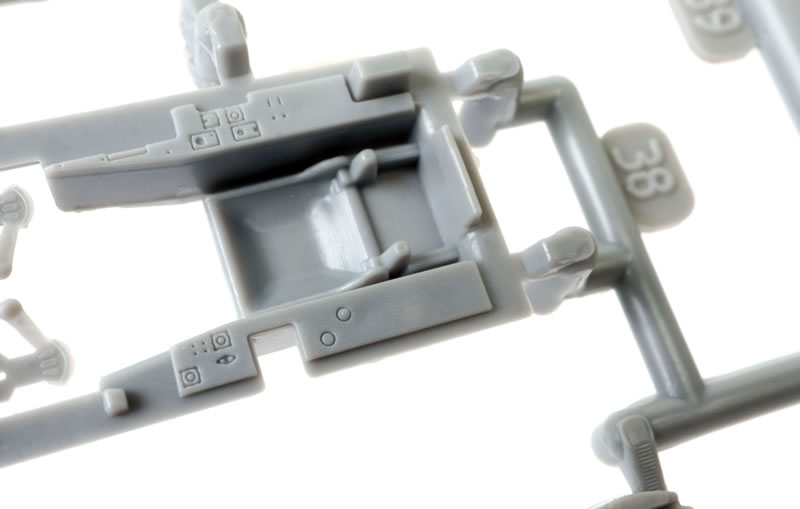
The cockpit tub is split into upper and lower halves. The rudder pedals are moulded to the upper half. These must be bent downward into position. I have previously done this on Arma Hobby kits by first brushing a thin line of Tamiya Extra Thin Liquid Cement and bending the parts after a minute or two. Don't over-bend the parts though.
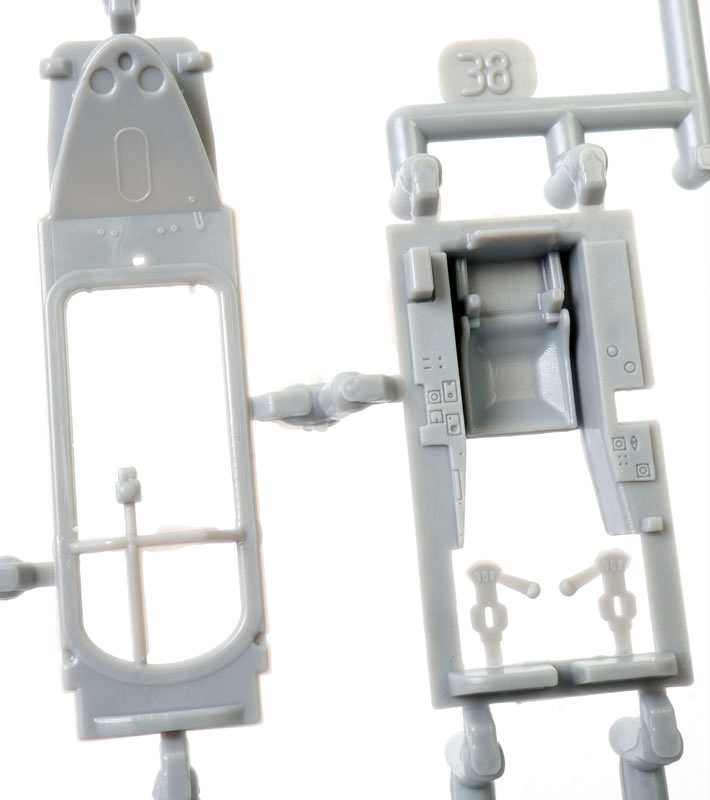
Decals are used extensively for the various cockpit surfaces. A plastic instrument panel is also supplied with raised bezels and switch box. The decal sheet supplies two sets of harness straps and instrument panels. I will probably cut the harness straps out of the decal sheet and fix them to the seat using Gator's Grip Acrylic Glue. I think decals will be very effective in the front office in this scale, but you can paint the parts if you prefer.
The wing parts are full span, top and bottom. They are thin at the trailing edges.
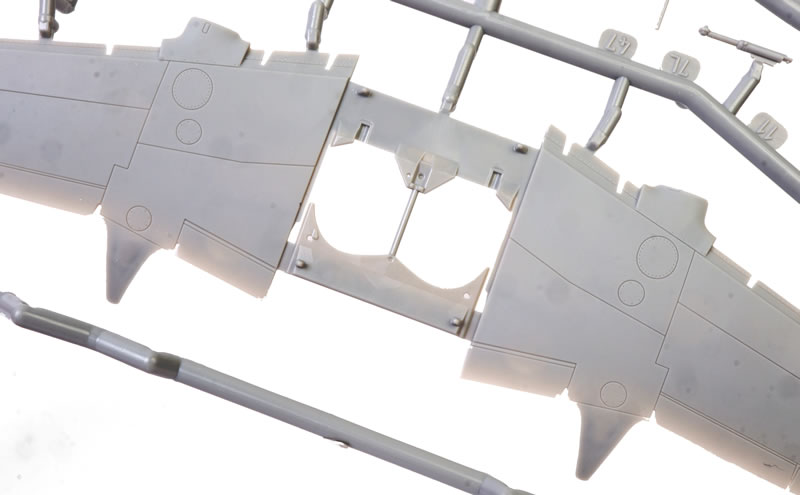
Leading edge slats are supplied as separate parts. They are designed to be built dropped, although a raised option is also offered by cutting off the slat mounts.
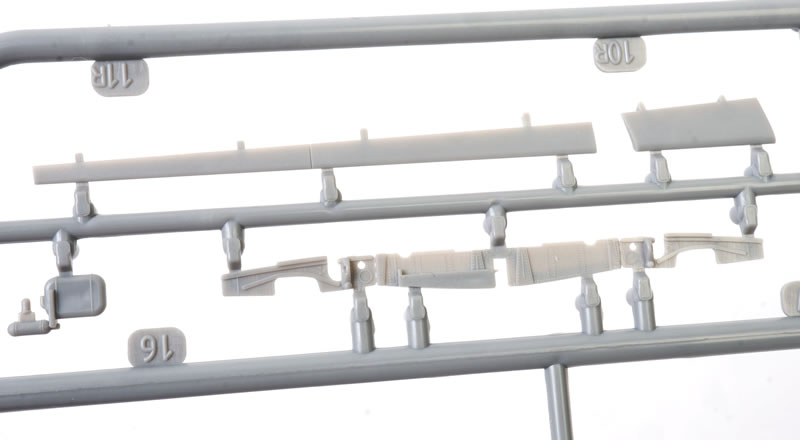
The wheel wells are really well detailed with the outside of the cockpit tub visible through the wheel well openings.
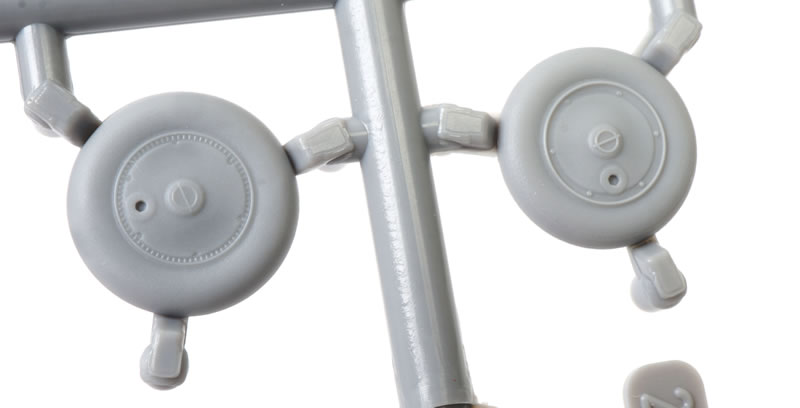
The main wheels are moulded as two pieces each. They are subtly bulged and flattened with fish-scale pattern tyre treads.

The nose wheel is moulded as a single part. Two different styles are offered but only one is applicable to the marking options.
Small details such as the DF loop, retraction struts and pitot tube are incredibly finely rendered.
Ordnance comprises a pair of under wing R4M air-to-air missiles and two 250 kg bombs under the nose. The bombs are not mentioned in the instructions so I suspect we will be seeing a separate 1/72 scale Me 262 A-2a from Arma Hobby some time soon.
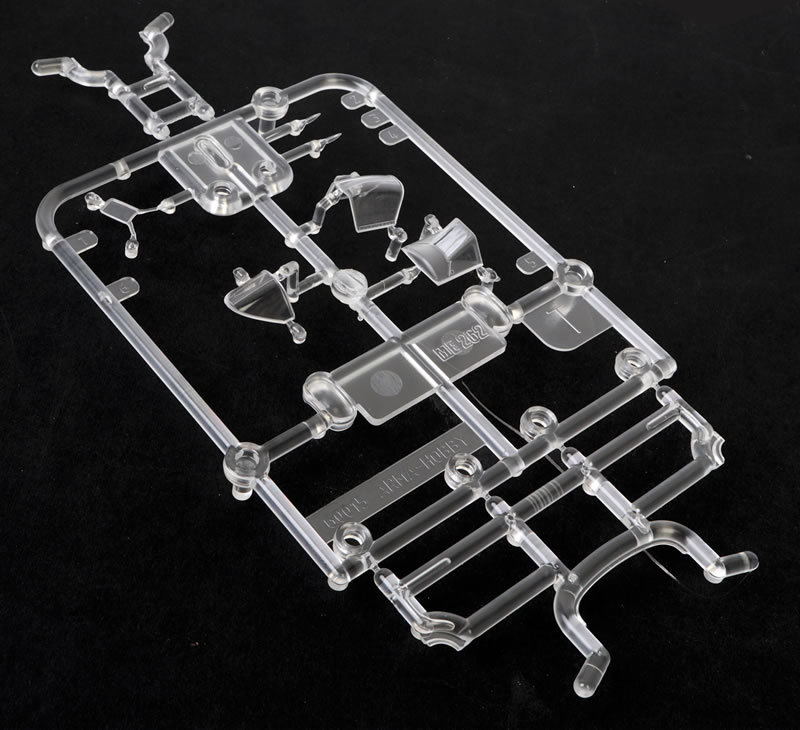
The clear sprue is thin and free from distortion.
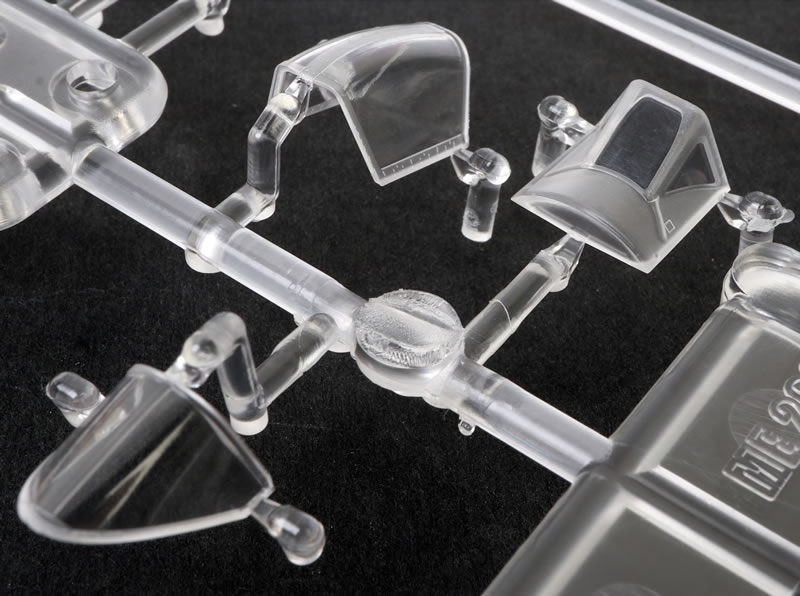
The canopy is supplied in four parts - the windscreen, internal armoured glass, centre and rear sections. Navigation and formation lights are moulded as part of the wings.
Self adhesive masks are supplied for the canopies and wheels. These are the paper Kabuki style masks. These will be welcomed by modellers who dislike cutting their own masks.
Instructions are supplied as a 12 page stapled A5-sized booklet.
The kit is packed into a end-opening cardboard box. I know it is a nit-pick but I would prefer to see future Arma Hobby releases in a lid-style of box.
Rounding out the package is a clever alignment jig.
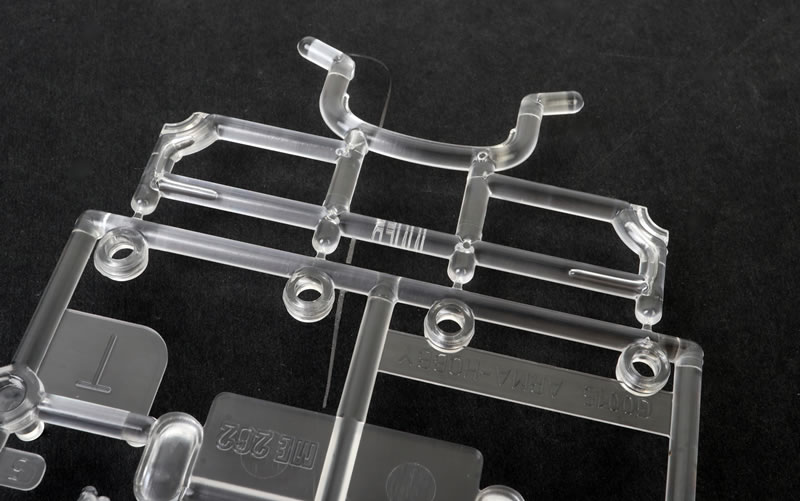
This is made up from three pieces on the clear sprue.
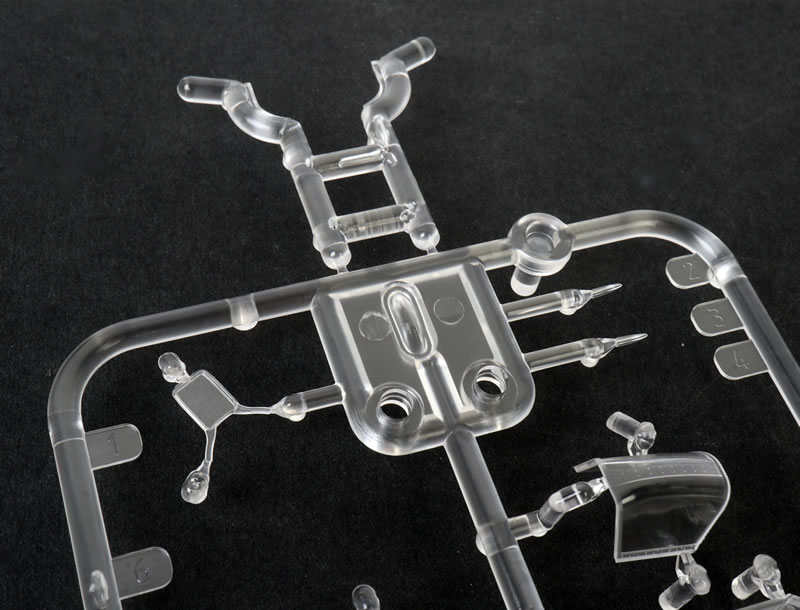
Assembly should be fast and easy, and it will guarantee alignment of the wings and the landing gear legs.
Marking Options
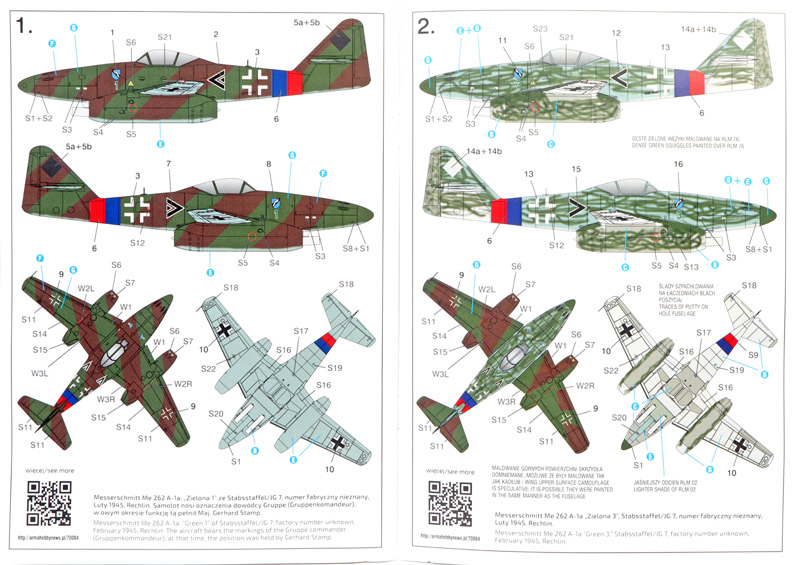
The kit decal sheet offers markings for three subjects:
-
Messerschmitt Me 262 A-1a, “Green 1” of Stabsstaffel/JG 7, factory number unknown, February 1945, Rechlin. The aircraft bears the markings of the Gruppe commander (Gruppenkommandeur); at that time, the position was held by Maj. Gerhard Stamp.
-
Messerschmitt Me 262 A-1a “Green 3,” Stabsstaffel/JG 7, factory number unknown, February 1945, Rechlin.
One set of Luftwaffe national markings are included.
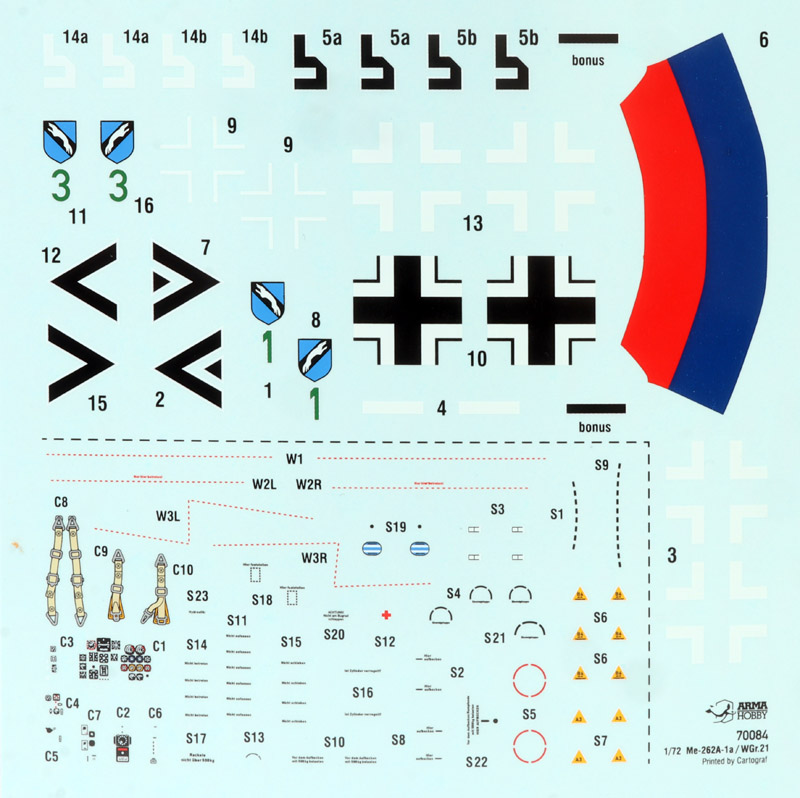
Stencil markings are printed on the same single sheet, as are propeller logos.
Colour callouts are provided for FS numbers and model paint numbers from a wide variety of companies – Hakata, AK, Lifecolor, AMMO, Humbrol, Vallejo and Tamiya.
Decals are printed by Cartograf. They are glossy, colours are well saturated and everything is in perfect register.
Another release from Arma Hobby, another reminder of just how far 1/72 scale injection moulding has come in recent years.
Arma's Me 262 A-1a W.Gr.21 combines outstanding moulding quality, clever engineering and excellent detail with the added benefit of self-adhesive masks and first-rate Cartograf decals.
The distinctive rocket armament offers something a little different from the standard fighter version, while the thoughtful alignment jig promises straightforward assembly.
Highly Recommended.
Thanks to Arma Hobby for the sample
Review Text and Images Copyright © 2026 by Brett Green
Page Created 20 July2026
Last updated
21 July, 2026
Back to HyperScale Main Page
Back to Reviews Page |
 Home
| What's New |
Features |
Gallery |
Reviews |
Reference |
Forum |
Search
Home
| What's New |
Features |
Gallery |
Reviews |
Reference |
Forum |
Search