Messerschmitt Bf 110 D
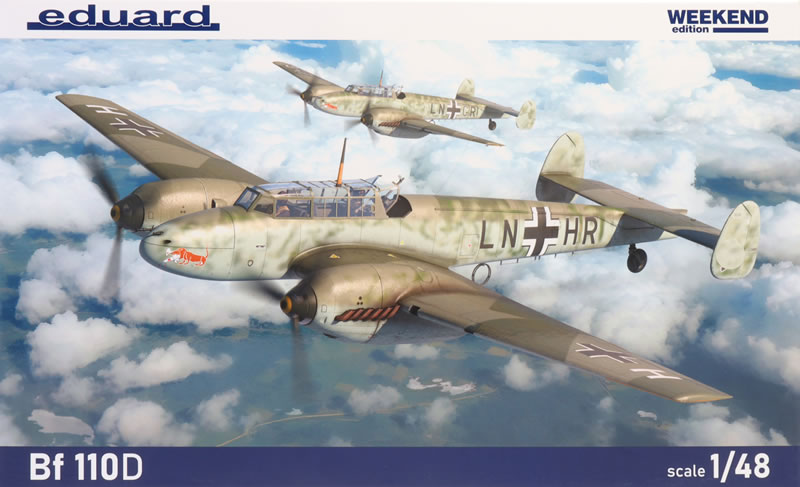
Eduard Weekend Edition, 1/48 scale
S
u m m a r y |
| Catalogue Number: |
Eduard Kit No. 8409 - Bf 110 D |
| Scale: |
1/48 |
| Contents and Media: |
Around 200 parts in grey coloured plastic;12 parts in clear; markings for
four aircraft. |
| Price: |
USD$43.96 plus shipping,
available online from Eduard
£28.65 EU Price (£23.88 Export Price) plus shipping available online from Hannants |
| Review Type: |
FirstLook |
| Advantages: |
High level of plastic detail; superb surface
textures including crisply recessed panels and subtle rivet lines where
appropriate; narrow sprue attachments; separate canopy parts for closed/open cockpit and rear
clamshell; Four attractive marking options. |
| Disadvantages: |
Modelling experience will be helpful |
| Recommendation: |
Highly Recommended to experienced
modellers or Luftwaffe aficionados |
Reviewed by Brett Green

The Messerschmitt Bf 110 D represented a significant evolutionary step in Germany’s long-range Zestorer, refining the heavy twin-engine fighter into a platform capable of extended operations over sea and distant frontiers. Conceived in the late 1930s as part of the Luftwaffe’s growing interest in deep-penetration missions, the D-series introduced a series of incremental but important changes that expanded the type’s operational reach.
Externally, the most distinctive addition was the large conformal belly tank—nicknamed the Dackelbauch (“dachshund belly”) by ground crews—which dramatically increased fuel capacity. Although cumbersome and aerodynamically inelegant, the tank gave the Bf 110 D the endurance required for maritime patrol, long-range escort and reconnaissance duties. Later sub-variants refined this concept with smaller drop tanks and revised fittings, reducing the drag and structural complications associated with the original design.
In service, the Bf 110 D found its niche with the Kustenfliegergruppen and Zestorergeschwader operating over the North Sea, Norwegian coast and Bay of Biscay. Crews appreciated the aircraft’s stability, generous navigation fit and defensive armament, all of which were valuable during long hours spent over open water. However, the D-series still shared the fundamental limitations of the Zestorer concept—while formidable against unescorted bombers, it remained vulnerable to agile single-engine fighters. This reality was underscored during the later phases of the Battle of Britain, where the Bf 110’s shortcomings in close combat became increasingly clear.
Despite these challenges, the Bf 110 D played an important transitional role. Its extended-range modifications informed later developments, while its operational use provided valuable experience in long-distance fighter and patrol missions. Although overshadowed by the evolving demands of the war, the D-series remains an interesting chapter in the story of Messerschmitt’s long-serving twin-engine workhorse.
The Bf 110 in 1/48 scale
The Fujimi 1/48 Bf?110 kit traces back to 1973 and reproduces early-war C and D variants of the twin-engine Zestorer.
Though basic by modern standards with minimal cockpit and wheel well detail and simplified undercarriage and drop-tank sections its overall dimensions and panel lines are reasonably accurate despite the reputation of the kit being undersized.
It remains a useful “starter” Bf? 110 for modellers, or a canvas for aftermarket upgrades and custom detailing.
The Dragon 1/48 Bf? 110 kit — released under the “Master Series” banner in 2016 — offers a finely detailed representation of the twin-engine heavy-fighter Messerschmitt Bf 110.
This version models the D-1 long-range “Dackelbauch” configuration, complete with belly fuel tank, detailed engines, and optional control-surface positions.
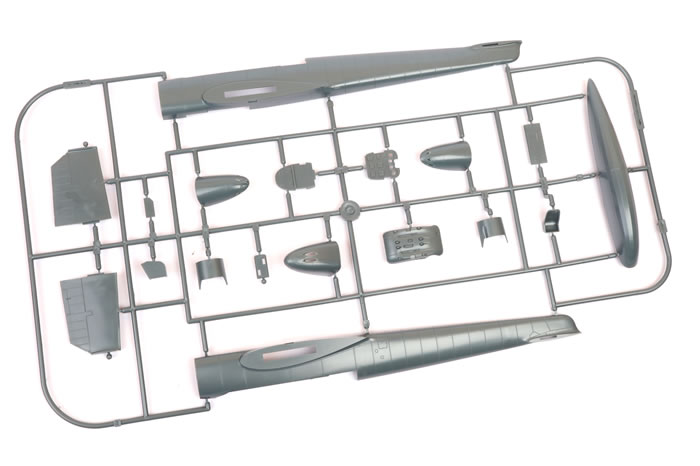
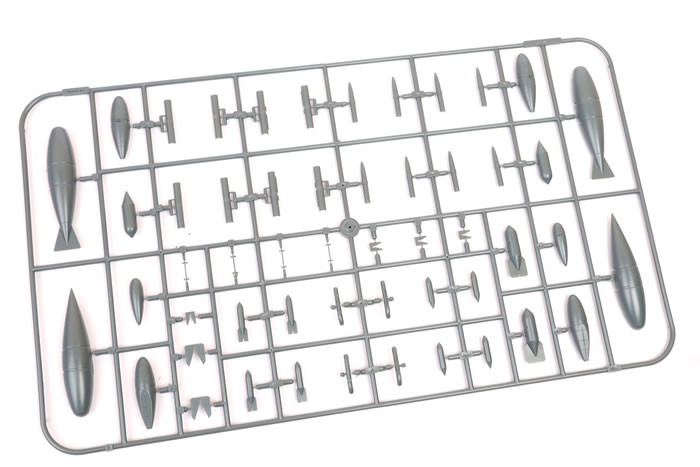
In this Weekend Edition boxing, Eduard has supplied the parts to build one complete Bf 110 D. With the two fuselages, it means that you can also build a C or an E if you have decals for those variants.
This release is moulded in a medium grey.
Eduard supplies both a standard length C/D/E fuselage and a second optional fuselage with the "boat tail" often seen on the Bf 110 D. The "boat tail" fuselage has the boat deployment cable moulded along the edge of the port-side fuselage spine - a nice touch.
The Kits - The Details...
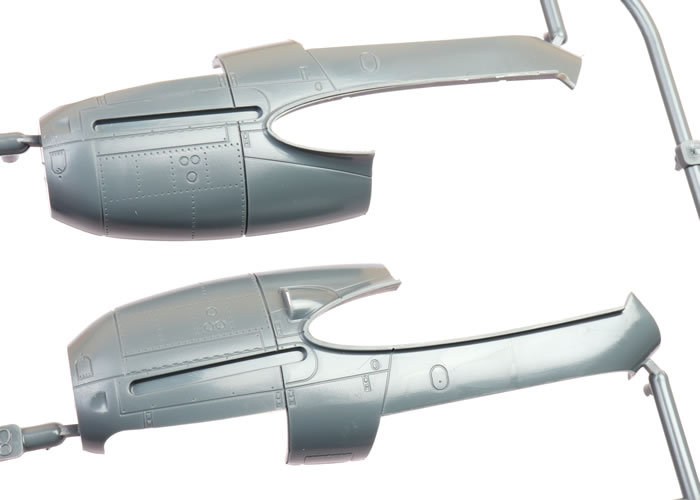
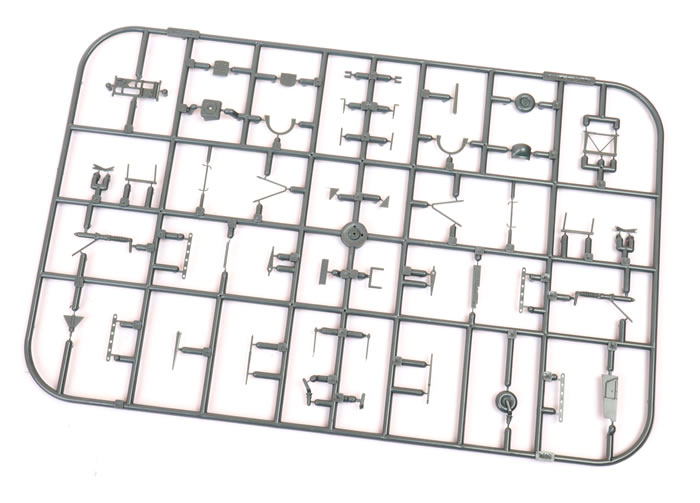
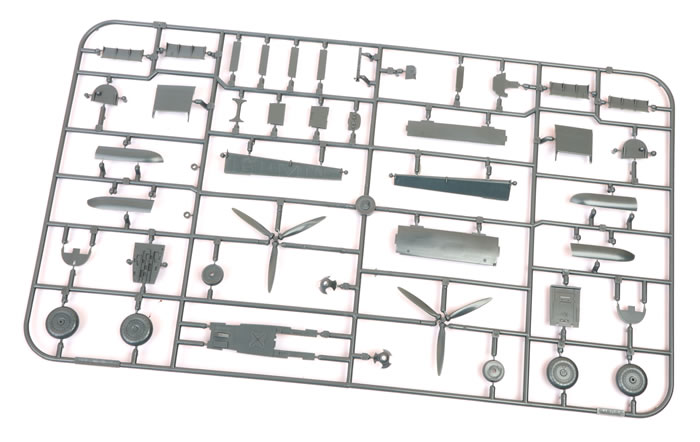
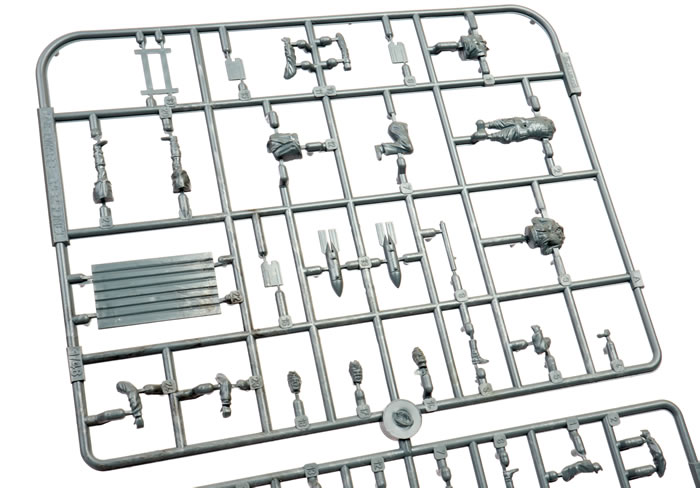
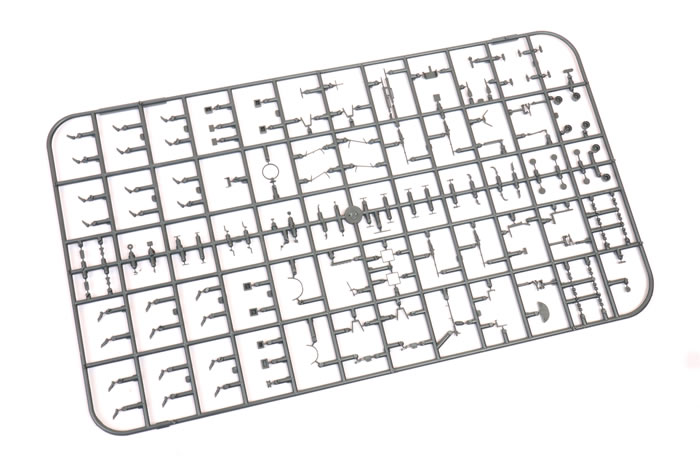
The plastic parts for the kit are contained on seven sprues via fine connectors.
Moulding quality was superb upon the kit's original release in 2007 and it is just as nice today. I could not find a single sink mark or
ejector pin in any area that will be visible on the finished model.
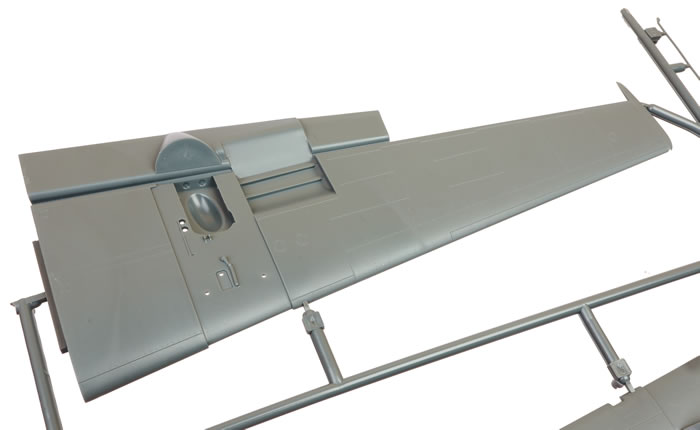
Crisply recessed panel lines are partnered with incredibly subtle rows
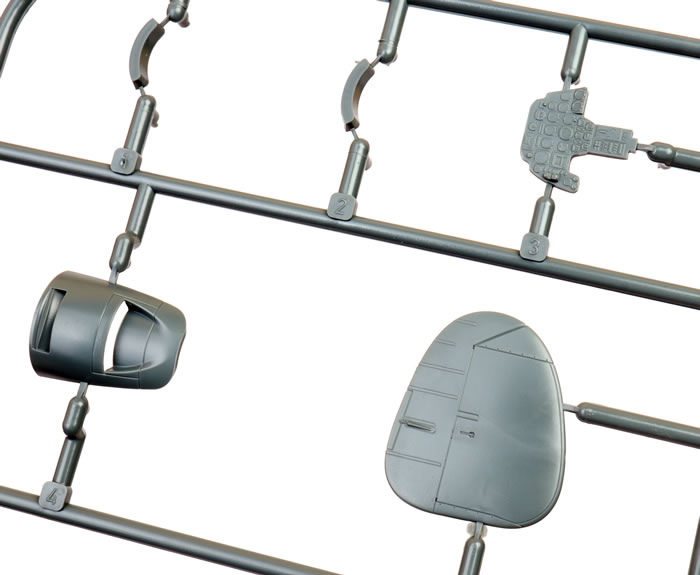
of rivets. I like the treatment of the fabric control surfaces too, with
rib tape detail being the most prominent feature - no massive sagging of
fabric.
The fuselage is broken down into the main halves with a separate nose
(upper and lower) plus an insert for the deck immediately aft of the
cockpit. As mentioned earlier, oe standard fuselage is supplied along with a separate longer fuselage with the "boat tail" moulded in place.
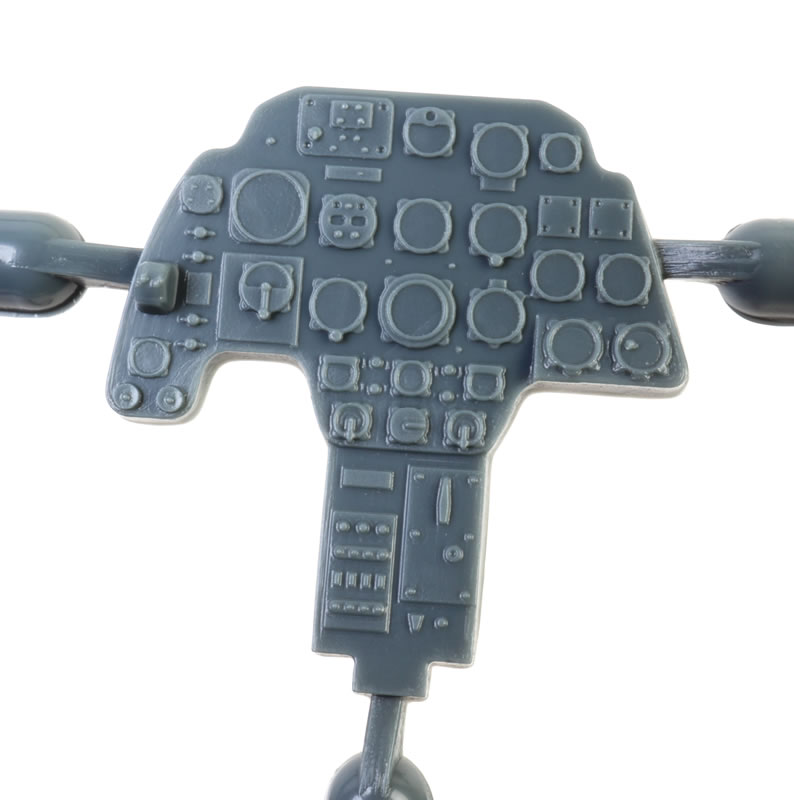
The cockpit is comprehensively fitted out with delicate
plastic parts.
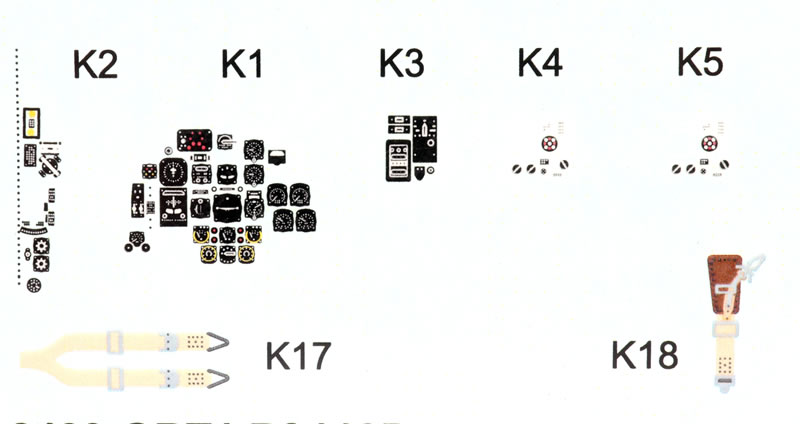
Seat harnesses and an overlay instrument panel decal are provided on the kit decal sheet.
The lower fuselage cannon are
visible through the fuselage floor, and plenty of spare ammunition is
provided. The rear gunner's seat can be made to swivel, while the
navigator's seat may be posed up or stowed.
The nose is fully equipped with four MG 17 machine guns and
ammunition feeds plus oxygen bottles. These may be displayed by posing
the separate gun cowl open.
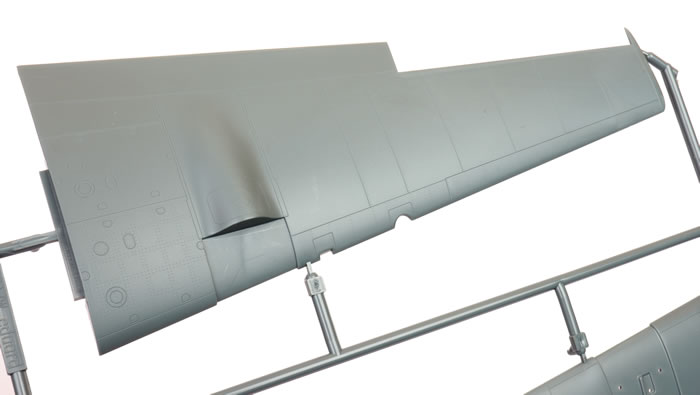
The wings are moulded with the flaps and leading edge
slats in the closed position. This may disappoint some modellers, but I
did a quick check of several books and nearly half of the Bf 110s were
parked with the slats and flaps up. If you really want to drop the flaps
and/or slats, the kit engineering will make this task fairly
straightforward with the bulges behind the nacelles moulded as part of
the bottom of the kit flaps.
Ailerons are provided as separate parts.
Wheel well detail is excellent
The shape of the spinners looks good, and the prominent pitch collars
are moulded near the base of each propeller blade. These should be
clearly visible when the propeller assembly is complete. The main wheels
seem to best represent those of the Bf 110 E -
reference photos suggest that the hubs should be smaller for the Bf 110
C and D.
Two sprues of clear parts are included for the kit. The prominent
glasshouse is an important part of the Bf 110's character, and Eduard
has done an especially good job on the complex rear clamshell. If the
rear canopy is to be depicted open, separate parts are supplied for the
clamshell and the sliding top rear sections. If the canopy will be
closed, a totally separate single part is used. A separate piece of
armoured glass is also depicted, with an alternate photo-etched frame if
the modeller prefers. The side and top canopy parts are also individual
pieces to permit posing in the open position. Furthermore, alternate
styles of rear canopy are offered - with the machine gun cutout and
without. Handles and other canopy details are supplied in both photo
etch and plastic. Eduard masks are also included to ease the pain of
painting that maze of canopy frames.
The original kit suffered from a few steps and gaps around the engine nacelles but Eduard addressed these issues wtih re-designed parts in this area. Fit of the engine nacelles should benefit from the revised parts in this kit.
Marking Options
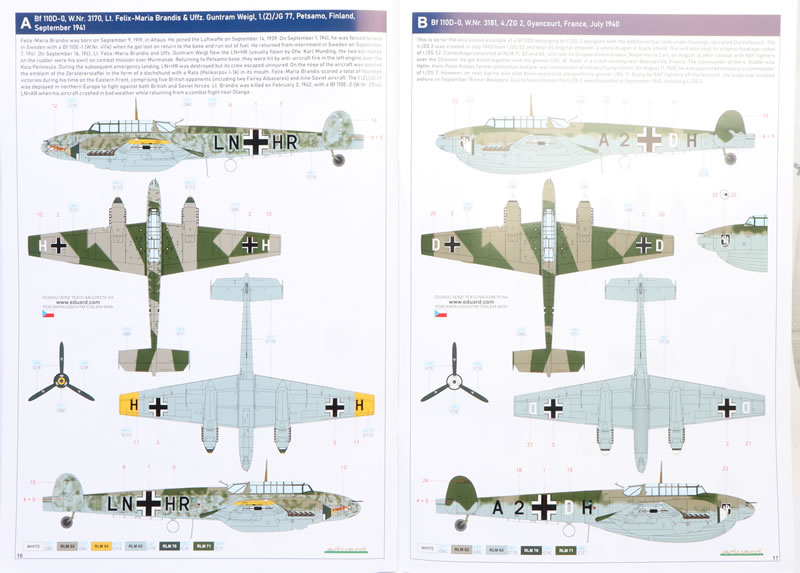
Two decal sheets cover four varied options and stencils:
-
Bf 110 D-0, W.Nr. 3170, Lt. Felix-Maria Brandis & Uffz. Guntram Weigl, 1.(Z)/JG 77, Petsamo, Finland, September 1941
-
Bf 110 D-0, W.Nr. 3181, 4./ZG 2, Gyancourt, France, July 1940
-
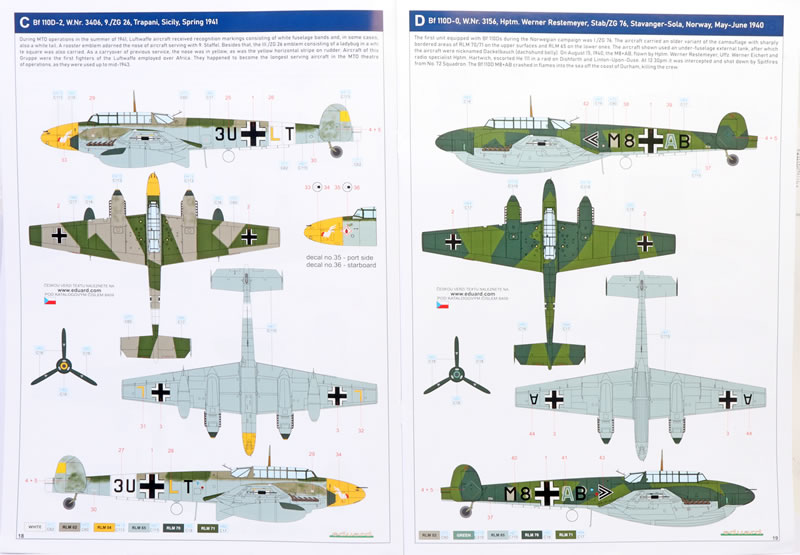
Bf 110 D-2, W.Nr. 3406, 9./ZG 26, Trapani, Sicily, Spring 1941
-
Bf 110 D-0, W.Nr. 3156, Hptm. Werner Restemeyer, Stab/ZG 76, Stavanger-Sola, Norway, May-June 1940
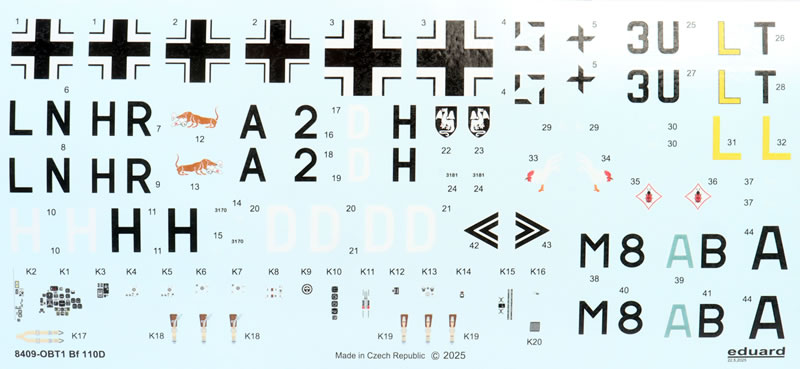
Decals look well printed on my sample and are in perfect register
and colour saturation.
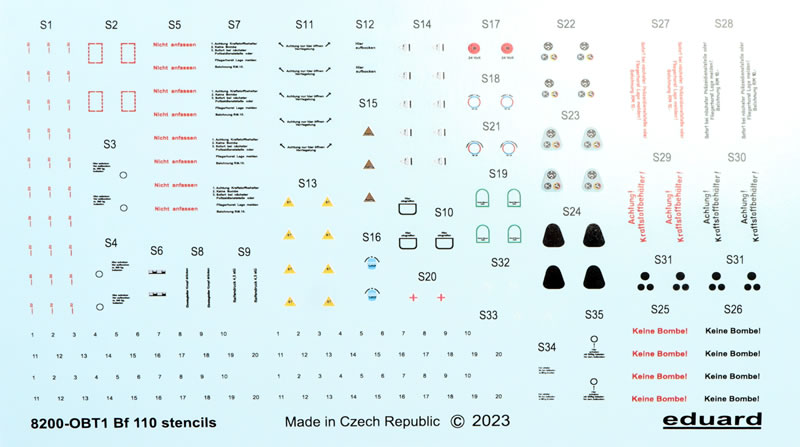
These are Eduard's standard style of decal that allows the modeller to lift off the carrier film after the decals have set.
Having built the original Bf 110 E kit upon its release, I can advise that it
looks as good when it is finished as it does in the box!
The high parts
count and some of the smaller and delicate parts mean that previous
modelling experience will be helpful before tackling this project.
This remains a highly detailed and accurate kit.
Thanks to Eduard for the sample
Review Text Copyright © 2025 by
Brett Green
Page Created 30 November, 2025
Last updated
30 November, 2025
Back to HyperScale Main Page
Back to Reviews Page |
 Home
| What's New |
Features |
Gallery |
Reviews |
Reference |
Forum |
Home
| What's New |
Features |
Gallery |
Reviews |
Reference |
Forum |